
Arriving in a new city often brings a wave of excitement, quickly followed by logistical panic. You step out of the airport terminal, grab your heavy bags, and immediately start wondering: how much taxi cost in Melbourne? Getting around Victoria’s bustling capital does not have to be a guessing game.
Navigating the streets of this vibrant city requires a basic understanding of local transport economics. From the busy central business district to the quiet coastal suburbs, fare structures vary based on distance, time, and traffic conditions. This comprehensive guide unpacks exactly what you can expect to pay for your journey.
Whether you are heading to an important business meeting or exploring famous laneways, knowing the rates helps you budget effectively. We will break down standard Melbourne taxi fares, peak time surcharges, and exact airport transfer rates. By the end of this detailed guide, you will never have to ask how much taxi cost in Melbourne again.
Breaking Down Melbourne Taxi Fares and Tariffs
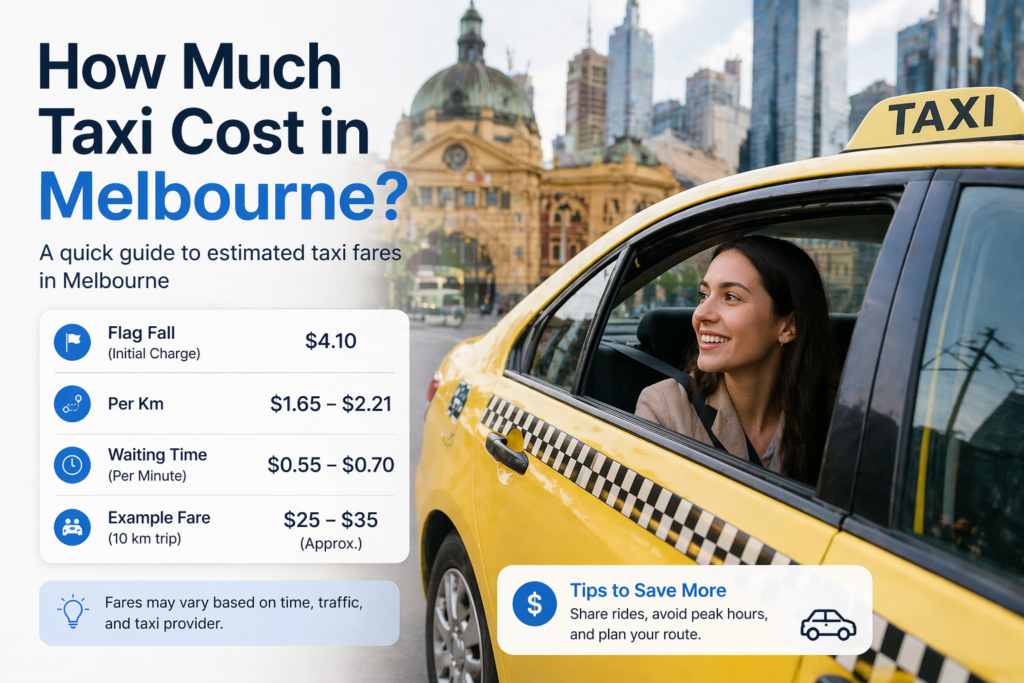
Understanding the dashboard meter is the first step to mastering local transit. Every ride starts with a flag fall. This is a base fee charged the moment you step inside the vehicle. If you are trying to figure out how much taxi cost in Melbourne during different times of the day, you must look closely at the three main tariff periods regulated by the state government.
Standard Day Rates (Tariff 1)
Tariff 1 applies during regular daytime hours, usually running from 9:00 AM to 5:00 PM on weekdays. This base rate offers the cheapest way to travel via traditional cabs. When locals ask how much taxi cost in Melbourne for a quick midday errand, they are referring to this standard pricing structure.
The meter ticks up based on both distance traveled and time spent waiting in traffic. The flag fall for Tariff 1 is typically around $4.20. After that, you pay a set amount per kilometer and a set amount per minute if the vehicle drops below a certain speed. This means a clear run down the highway will cost less than sitting in bumper-to-bumper gridlock for the exact same distance.
Overnight and Weekend Tariffs (Tariff 2)
The pricing naturally changes when the sun goes down. Tariff 2 kicks in during weekday evenings and weekend mornings. If you plan to enjoy the local nightlife in areas like Fitzroy or St Kilda, you need to budget for these moderately higher rates.
Knowing exactly how much taxi cost in Melbourne at midnight prevents bill shock at the end of your fun night out. The flag fall jumps up slightly, and the per-kilometer rate increases. This compensates drivers for working unsociable hours. If you are traveling between 5:00 PM and 9:00 AM on a weekday, you will see Tariff 2 illuminated on the meter.
Peak Period Surcharges (Tariff 3)
Tariff 3 represents the highest possible rate on the meter. It applies specifically on late Friday and Saturday nights into the early morning hours. This covers the absolute busiest periods in the city, when passenger demand heavily outweighs driver supply.
Anyone asking how much taxi cost in Melbourne after a major sporting event at the MCG will likely find themselves paying this premium tariff. The flag fall climbs to over $6.00, and the distance rates peak How Much Taxi Cost in Melbourne. The state implemented this tariff to encourage more drivers to stay on the road during the busiest, most chaotic periods of the weekend.
Airport Transfer Rates: Tullamarine and Avalon
Traveling between the airport and the city center represents the most common route for domestic and international visitors. Melbourne features two primary passenger airports: Tullamarine and Avalon. Your arrival destination heavily dictates your transit budget.
When calculating how much taxi cost in Melbourne for standard Tullamarine airport runs, expect to pay between $60 and $75 to reach the city center. This journey takes about thirty to forty minutes in good conditions How Much Taxi Cost in Melbourne. You must always account for traffic conditions on the busy Tullamarine Freeway, especially during morning and afternoon peak hours.
Avalon Airport Transfers
Avalon Airport sits much further away from the city center, located down the highway toward Geelong. If you fly into Avalon, your transit costs will increase significantly. When tourists want to know how much taxi cost in Melbourne from Avalon, they are often surprised to hear estimates ranging from $120 to $150. For this specific route, taking the dedicated airport bus might be a far better option for budget-conscious travelers.
Airport Rank Fees
Catching a cab directly from the designated airport ranks incurs a specific airport rank fee. This small surcharge goes directly to the airport corporation, not the driver. It automatically adds to your meter when you leave the terminal How Much Taxi Cost in Melbourne. Tullamarine charges around $4.50 for this privilege.
Tolls and Extra Road Charges
Many optimal routes into the city utilize toll roads like CityLink or EastLink. Drivers must add these exact toll costs to your final fare. They do not make a profit on tolls; they simply pass the exact cost onto the passenger.
You can always ask your driver to take a toll-free route. However, this might increase your travel time significantly, which could ultimately cost you more on the time-based meter.
CBD Taxi Pricing and Popular Short Trips
Navigating the central business district involves a lot of stopping and starting. CBD taxi pricing relies heavily on time-based charges because gridlock traffic frequently brings cars to a standstill. If you wonder how much taxi cost in Melbourne for a short ten-minute hop across the grid, expect to pay around $15 to $20.
The city center features specific taxi ranks where you can easily hail a ride. Major hubs include Flinders Street Station, Southern Cross Station, and the Crown Casino complex. During busy weekday afternoons, grabbing a cab from a designated rank offers the fastest way to get to your next meeting.
Let us look at a few popular short routes. Traveling from the CBD to the popular beachside suburb of St Kilda usually costs between $20 and $25 on a standard day tariff How Much Taxi Cost in Melbourne. Heading from the city out to the trendy cafes of Fitzroy might run you $15 to $18. Remember that crossing the CBD during rush hour will drive your meter up faster than smooth highway driving.
Understanding Taxi Booking Fees and Extras
Calling ahead to secure your ride brings incredible peace of mind, especially for early morning flights. However, this convenience comes at a small price. Taxi booking fees apply whenever you arrange a pickup via phone or a mobile application.
When you want to know how much taxi cost in Melbourne with all extras included, you must factor in these booking charges. They generally range from $2.00 to $3.00. This fee compensates the driver for the unpaid time and fuel spent driving to your specific location.
You will also encounter surcharges for specific payment methods. Paying with a credit card or a contactless smart device usually adds a flat five percent fee to your total bill How Much Taxi Cost in Melbourne. This is a legally capped surcharge regulated by the government.
Finally, be aware of cleaning fees. If you or someone in your party makes a severe mess in the vehicle, the driver has the legal right to charge a substantial cleaning fee, sometimes up to $120. This covers their lost wages while the car is off the road being detailed.
Taxis vs. Rideshare Services in Melbourne
The transport landscape has changed drastically over the last ten years. Many travelers instinctively compare traditional cabs against rideshare giants like Uber, Didi, or Ola. The choice between the two often comes down to timing and weather conditions.
When figuring out how much taxi cost in Melbourne compared to rideshares, you have to look closely at surge pricing. Traditional cabs offer regulated, predictable maximum fares based purely on the meter How Much Taxi Cost in Melbourne. They never use multiplier surges.
Rideshares might offer cheaper base rates during quiet periods, but their prices multiply rapidly during rainstorms, train strikes, or major events. Asking how much taxi cost in Melbourne during a massive downpour often reveals that traditional metered cabs become the much cheaper option. A $40 rideshare can quickly become a $120 rideshare during a thunderstorm, while the taxi fare remains completely unchanged.
Furthermore, traditional cabs have legal permission to drive in designated bus lanes across the city. This perk allows them to bypass heavy congestion during peak hours. That time saved often translates to money saved, giving traditional cabs a distinct advantage during morning and afternoon rush hours.
Specialty Vehicles: Maxi Taxis and Silver Service
Sometimes a standard sedan simply will not cut it. Large groups or passengers with extensive luggage need more space. This is where Maxi Taxis come into play. These are large vans capable of seating up to ten passengers comfortably.
Maxi Taxis usually charge a slightly higher flag fall and distance rate. However, when split among seven or eight people, they offer incredible value. Many Maxi Taxis are also fully equipped with hydraulic lifts, providing vital wheelchair accessibility.
If you want a more luxurious experience, you can request a Silver Service cab. These are premium vehicles, often high-end European sedans, driven by highly experienced operators in uniform. They charge an extra premium on top of the standard meter rate. They are highly popular for corporate travel and special events like weddings.
Tips to Save Money on Your Next Ride
Smart travelers know how to minimize their transit expenses without sacrificing safety or convenience. First, always check your route on a smartphone map application before starting your journey. Having a general idea of the distance and route helps you spot if a driver makes an honest mistake and takes an unnecessarily long path.
Second, share your ride whenever possible. Splitting a fare with colleagues or fellow travelers drastically reduces your individual expense. If you frequently wonder how much taxi cost in Melbourne, you will find that a split fare often rivals the price of public transport tickets for small groups, with the added benefit of door-to-door service.
Third, keep some physical cash on hand. While card payments offer great convenience, avoiding the five percent electronic payment surcharge keeps a few extra dollars in your pocket. Every small saving adds up over the course of a long business trip or family vacation.
Finally, consider the free tram zone. Melbourne offers a completely free tram network within the strict boundaries of the CBD. If your journey starts and ends within this grid, you do not need to pay for transport at all. Save your taxi budget for longer trips out into the suburbs or late-night journeys when the trams stop running.
Conclusion
Navigating Victoria’s capital does not need to drain your travel budget. By understanding tariffs, booking fees, and route options, you take full control of your transit expenses. Knowing exactly how much taxi cost in Melbourne empowers you to make smart, cost-effective travel decisions every single time you step onto the street.
Plan ahead, watch the meter, and do not hesitate to ask your driver for a rough fare estimate before you set off. Drivers are usually happy to provide a ballpark figure based on current traffic conditions. For more detailed information on specific toll rates and route maps, check the official Commercial Passenger Vehicles Victoria website.
Use this knowledge to compare your options, utilize traditional cabs when rideshare surges hit, and avoid unnecessary extra fees. Safe travels, enjoy your smooth rides, and take time to experience everything this magnificent Australian city has to offer.